
Gum Disease Treatment – Indianapolis, IN
We Can Soothe Your Sensitive Gums

Many people are unaware of the critical role that gums play in oral health. However, healthy gums are essential for a great smile. When your gums fall victim to bacterial infection, your teeth may lose their strong foundation. In fact, gum disease is the most common reason for adult tooth loss in the United States. If you’re dealing with sore, sensitive, or bleeding gums, we ask that you call Martinez Dentistry today. With gum disease treatment in Indianapolis, IN, Dr. Corey Martinez can target the infection, put a stop to your uncomfortable symptoms, and give you an overall healthier smile.
Why Choose Martinez Dentistry for Gum Disease Treatment?
- Soft Tissue Laser Makes Treatment Comfortable & Precise
- Calming Dental Sedation Available
- Friendly, Personalized Approach to Dental Care
What is Gum Disease?
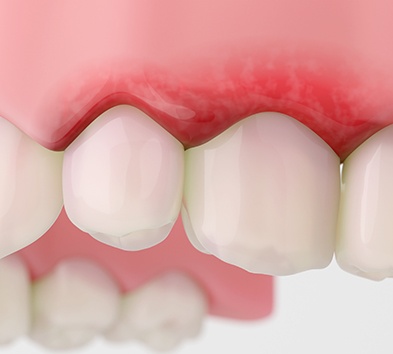
Gum disease is a bacterial attack on the soft oral tissues that hold your teeth in place. When infected, your gums can begin to bleed, become inflamed, and even become tender to the touch. When caught in its earliest stages – gingivitis – the symptoms can be reversed as long as you continue to practice good oral hygiene at home and maintain regular visits to our dental office.
If gum disease remains undetected or untreated, the infection can spread, negatively affecting your bone, which can cause tooth loss.
Symptoms of Gum Disease
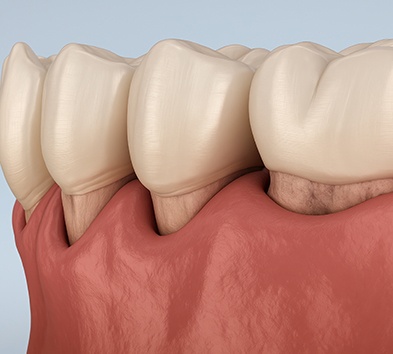
Knowing the symptoms associated with gum disease is the first step in treating the problem before it worsens. If you notice any of the following signs, do not wait to schedule a visit with our office:
- Bad breath (halitosis)
- Gum recession
- Bleeding and inflamed gums
- Red gums
- Tooth sensitivity
- Changes in your bite
- Tooth loss
- Difficulty chewing
How Do We Treat Gum Disease

When you arrive for a checkup, if our team discovers early (or late) signs of gum disease, we will recommend the appropriate form of treatment to improve the state of your oral and overall health. This might include:
Scaling & Root Planing
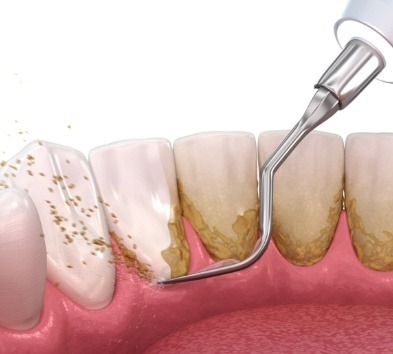
Often, the most direct way to treat gum disease is with a two-pronged procedure called scaling and root planing. The scaling process involves removing plaque and tartar deposits that have gathered above and below the gumline. Then comes root planing, in which we smooth the roots of the teeth, encouraging them to quickly reattach to your gums. Because we use a soft tissue laser rather than traditional tools, we can preserve a greater amount of healthy gum tissue and shorten the duration of required healing time between treatments.
Antibiotic Treatment

To supplement scaling and root planing, we can administer Arestin, which is an antibiotic treatment that works to reduce bacteria even when you’re not in our dental office. We’ll quickly apply the medicine to your gums, specifically the pockets between your gums and teeth that can easily harbor dangerous bacteria. The antibiotic begins working almost immediately, and it gradually spreads throughout your gums to eliminate bacteria in areas that even our incredibly advanced instruments cannot reach.
Laser Periodontal Treatment

Using our soft tissue laser, our team will rely on the optimal precision provided by the laser to target the infection and inflammation that exists within the gums. We’ll carefully clear out the gum pockets, eliminating any existing bacteria that exist so that the tissues can begin to heal thoroughly, all without touching healthy areas of soft tissue. This non-invasive form of treatment is considered more comfortable and requires minimal downtime.
Gum Disease Treatment FAQs
How Common is Gum Disease?
Experts estimate that gum disease affects nearly half of adults over the age of 30, and 70% of adults over 65. It is by far the most common cause of tooth loss in the US. Clearly, just because many people do experience some form of gum disease at some point in their life, that doesn’t mean it’s not harmful or dangerous. More recent studies have also linked the condition to Alzheimer’s, heart disease, certain respiratory illnesses, and other concerning system issues. Health providers have good reason to consider gum disease to be an epidemic.
Is Gum Disease a Dental Emergency?
Absolutely. Depending on the severity of your symptoms, you might not necessarily need same-day care, but gum disease should definitely be addressed in a timely manner. It won’t go away on its own, so the longer you wait for treatment, the more havoc it can wreak on your smile.
It’s also important to remember that gum disease is, more or less, a bacterial infection. In extreme cases, it has been known to spread to other parts of the body, and researchers have found traces of gum disease bacteria in the lungs and brain.
Are There Any Risk Factors Associated with Gum Disease?
Gum disease is a complicated condition in that yes, there are risk factors that increase your risk – and it can make pre-existing conditions harder to manage. Patients with diabetes, for example, are more likely to develop gum disease because their body has trouble regulating blood sugar. At the same time, inflammation caused by gum disease can trigger blood sugar spikes as the immune system kicks into high gear.
Here are a few other health complications that can increase your risk:
- Immune system dysfunction
- Long-term stress
- Heart disease
- Nutrition imbalances
- Hormone fluctuations
- Poor oral hygiene
What’s the Best Way to Prevent Gum Disease?
The primary cause of gum disease is oral bacteria build up, so the best prevention methods are all about keeping your mouth clean and hygienic. Studies show that brushing your teeth twice daily, flossing once per day, and visiting your dentist for a checkup and cleaning every six months significantly reduces your risk of developing harmful oral problems. If you have a health condition or lifestyle habits that could increase your risk, it’s also important to talk to your dentist and doctor about managing your condition or changing your routine.